Apple unveils its first foldable iPhone - iPhone Duo from $1,999, plus iPhone 18 Pro, new watches and AirPods 5
9 September 2026This article was created using a solution that orchestrates a farm of AI models under human supervision for research, verification, proofreading, translation, and more.
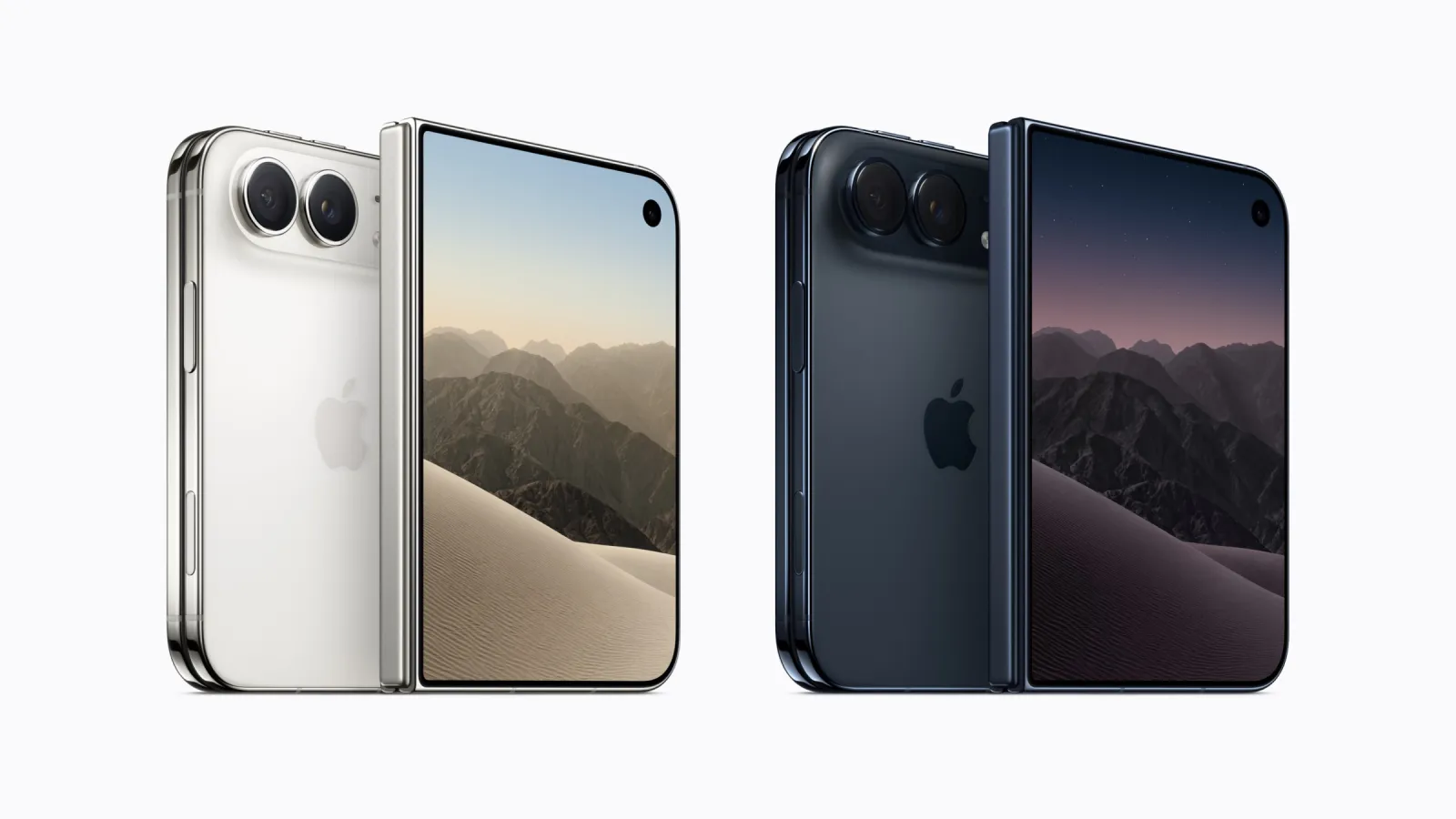
Wednesday, September 9, 10 a.m. Pacific time, Steve Jobs Theater at Apple Park. John Ternus walks on stage, CEO of Apple since September 1. Tim Cook, after fifteen years, has become chairman of the board. It is Ternus's first keynote in the role. For the first fifty minutes he shows the iPhone 18 Pro, Apple Watch Series 12 and Ultra 4, and AirPods 5. Then he says there is "one more thing" - and pulls out the first foldable iPhone.
Below is everything Apple showed, with US prices and dates. No verdicts - those I leave to you. At the end, separately: what was rumored before the event and what was not there.
iPhone Duo - the first foldable iPhone
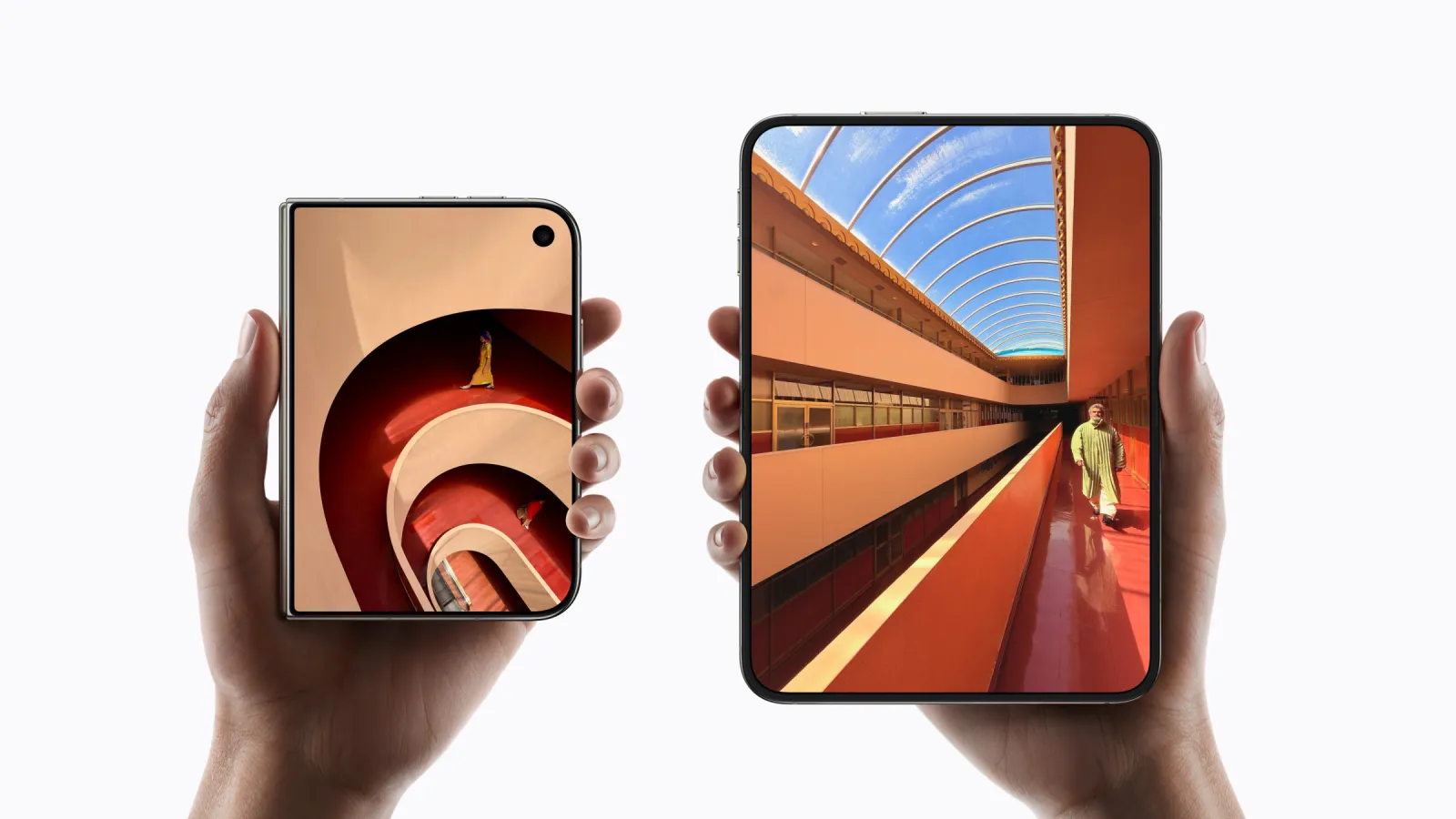
It is called iPhone Duo, not "Ultra" or "Fold". Opened, it has a 7.6-inch display with half again the area of the iPhone 18 Pro Max screen. Closed, the outer display measures 5.4 inches, with 90 percent of the area of the iPhone 18 Pro screen. Both displays share the same aspect ratio, so when you fold the phone the content simply shrinks instead of jumping to a different layout. Apple compares the closed Duo to a passport.
Dimensions and weight from the tech specs: 5.2 mm thin when open (Apple says it is the thinnest iPhone ever), 11.3 mm closed, 254 grams. The body is Grade 5 titanium polished to a mirror finish, Ceramic Shield 2 on the front, Ceramic Shield on the back, IP68 water resistance. The hinge is made of more than a hundred parts and closes with magnets. The inner display has a matte nano-texture finish that, according to Apple, "minimizes the visibility of the crease" - Apple does not claim there is no crease.
On stage Ternus said of the competition: "Others have created foldables that just feel like two phones awkwardly stuck together." In the press release he added: "iPhone Duo is the most transformational change to iPhone since the original."
There is no Face ID. Touch ID sits in the side button and works the same whether the phone is open or closed; you can also unlock with your watch. The FaceTime camera hides under the inner display and appears only when in use. On the back are two 48 MP cameras: the main one (26 mm, f/1.6) with a 2x "optical-quality" zoom cropped from the sensor, and an ultra wide (13 mm, 120 degrees). There is no telephoto. Video: 4K at 120 frames per second in Dolby Vision.
The folding design gives the camera a few tricks no other iPhone has. Duo Preview shows the person being photographed a preview on the outer display. Kid Cue plays Peanuts animations there so a child looks at the lens. Smart Take snaps the photo by itself when AI models decide people are posing. Duo FaceTime lets a second person join a call through the outer display. Siri Camera is a mode in which Siri sees what the user sees and answers questions about it.
Inside is the same A20 Pro as in the iPhone 18 Pro, paired with a vapor chamber - Apple quotes sustained performance up to 35 percent higher than the iPhone 17 Pro. Two batteries, one in each half, work as one: up to 31 hours of video on the inner display, up to 44 on the outer, up to 24 hours with both used equally. A 50 percent charge takes about 20 minutes. There is no SIM tray - Duo is eSIM-only everywhere in the world.
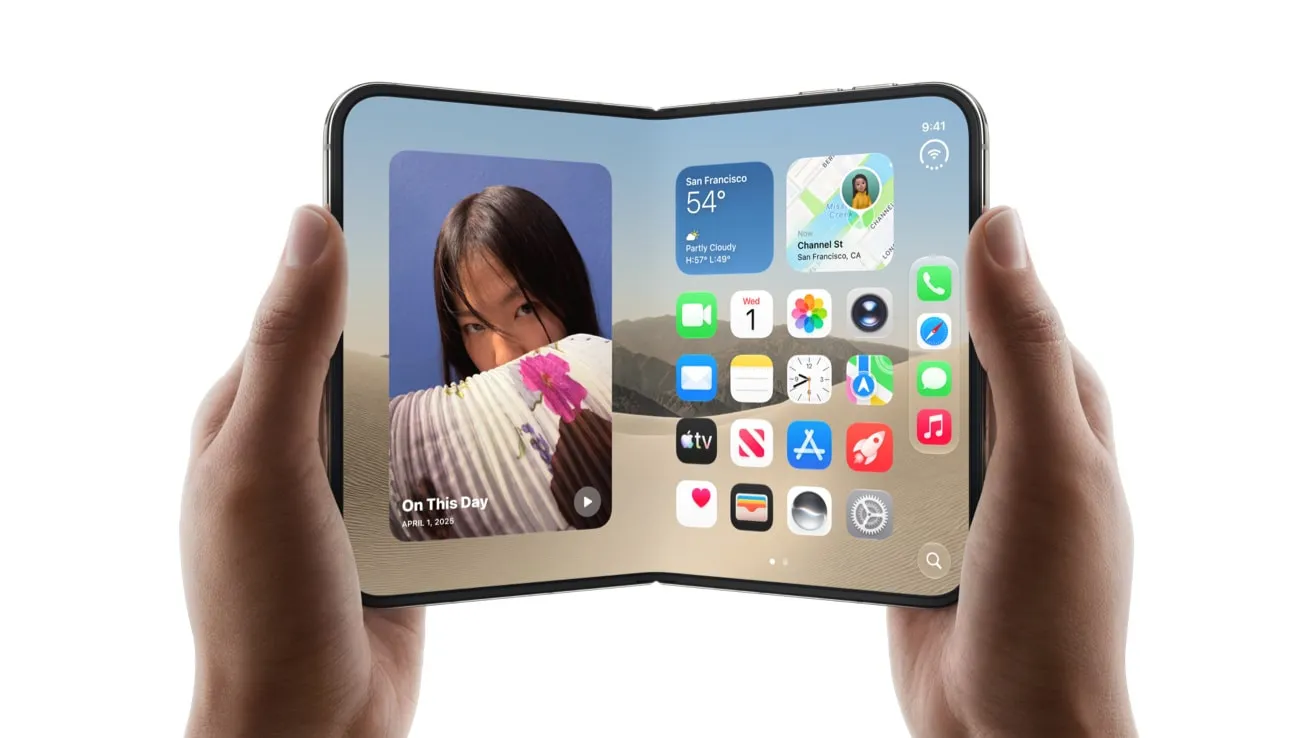
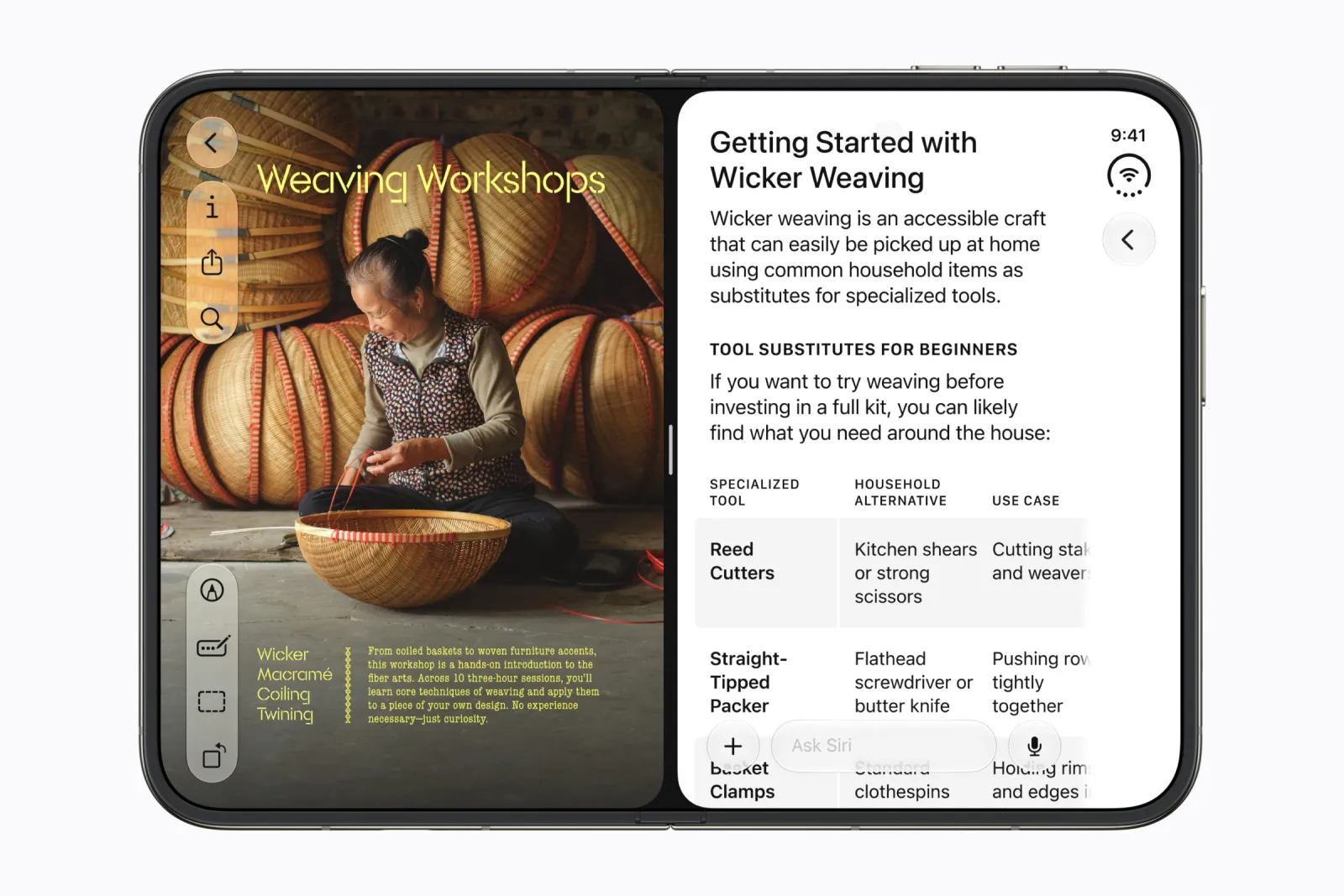
iOS 27 has been rebuilt for Duo: the Dock, the Lock Screen buttons and in-app navigation move to the side of the display, the Dynamic Island turns vertical, and when the phone is open you see two Home Screen pages side by side. Split View lets you open two apps next to each other - a first on iPhone - or two windows of the same app. StandBy switches on when you set the phone down, even without a charger. Netflix, Zoom and Slack are among the apps adapted at launch. Apple Pencil support arrives "later this year." Duo ships with iOS 27.1.
Colors: Star White and Night Sky. US prices: $1,999 (256 GB), $2,199 (512 GB), $2,599 (1 TB), $3,199 (2 TB). Pre-orders open Friday, October 16 at 5 a.m. Pacific time, with general availability on October 23 in more than 70 countries at once. Another 28 countries follow a week later. The case costs $79, the Folio with kickstand $129.
iPhone 18 Pro and 18 Pro Max
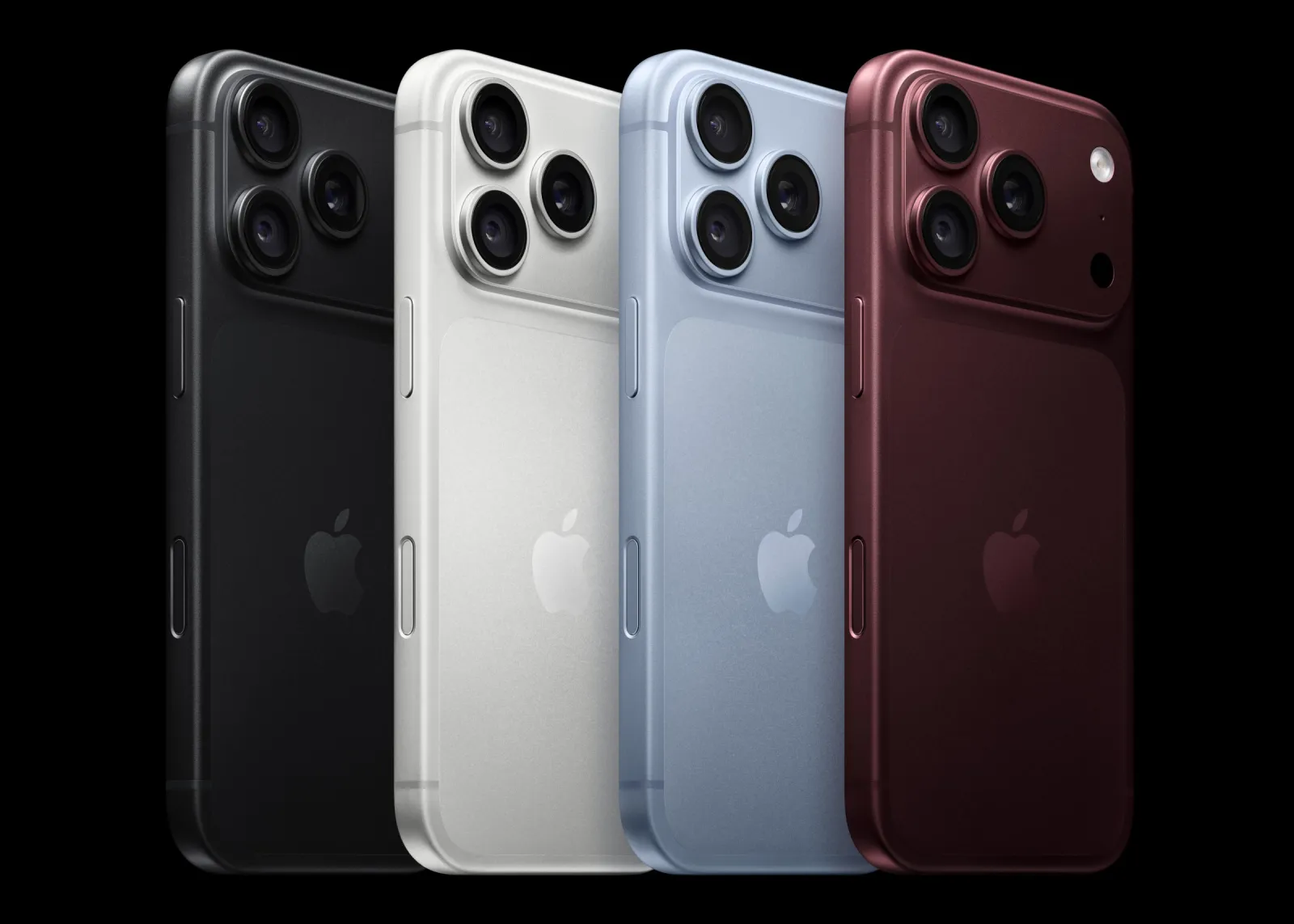
The look is almost unchanged; inside is the new A20 Pro - the first mass-produced smartphone chip built on a 2 nm process. Six CPU cores up to 20 percent faster than the A19 Pro, seven GPU cores up to 40 percent faster, and two Neural Engines with 16 cores each, which is twice the AI muscle. The vapor chamber is three times larger than in the 17 Pro, which is supposed to deliver up to 40 percent higher sustained performance.
The biggest change is in the camera. The 48 MP main camera has a variable aperture, from f/1.48 to f/4, controlled by six blades thinner than a human hair. The ultra wide is still 48 MP, the 48 MP telephoto has a 100 mm focal length (4x) with a tetraprism periscope. Apple counts that as a 16x "optical-quality" zoom range. The front camera is an 18 MP Center Stage unit. New for photographers: Apple Reference Image, a cryptographic pixel-level signature applied the moment a photo is taken, as proof that the picture came from a camera and not from AI. In the European Union you cannot take such photos at launch; you can only view them and verify their authenticity.

Displays: 6.3 inches on the Pro and 6.9 inches on the Pro Max, 3,000 nits outdoors, a smaller Dynamic Island with room for three Live Activities at once. Battery: up to 34 hours of video on the Pro and up to 43 on the Pro Max, a 50 percent charge in about 15 minutes. In the US and eleven other countries the phone is eSIM-only; elsewhere it keeps a nano-SIM slot alongside eSIM. It also has the N1 chip with Wi-Fi 7 and the C2 modem. The body is aluminum; the Pro weighs 211 g, the Pro Max 249 g.
Colors: black, silver, glacier blue and burgundy. US prices: iPhone 18 Pro $1,199 (256 GB), $1,399 (512 GB), $1,799 (1 TB), $2,399 (2 TB). iPhone 18 Pro Max from $1,299. That is $100 more than a year ago. Pre-orders open Saturday, September 12 at 5 a.m. Pacific time, on sale Friday, September 18. The box contains only a cable.
Apple Watch Series 12 and Ultra 4
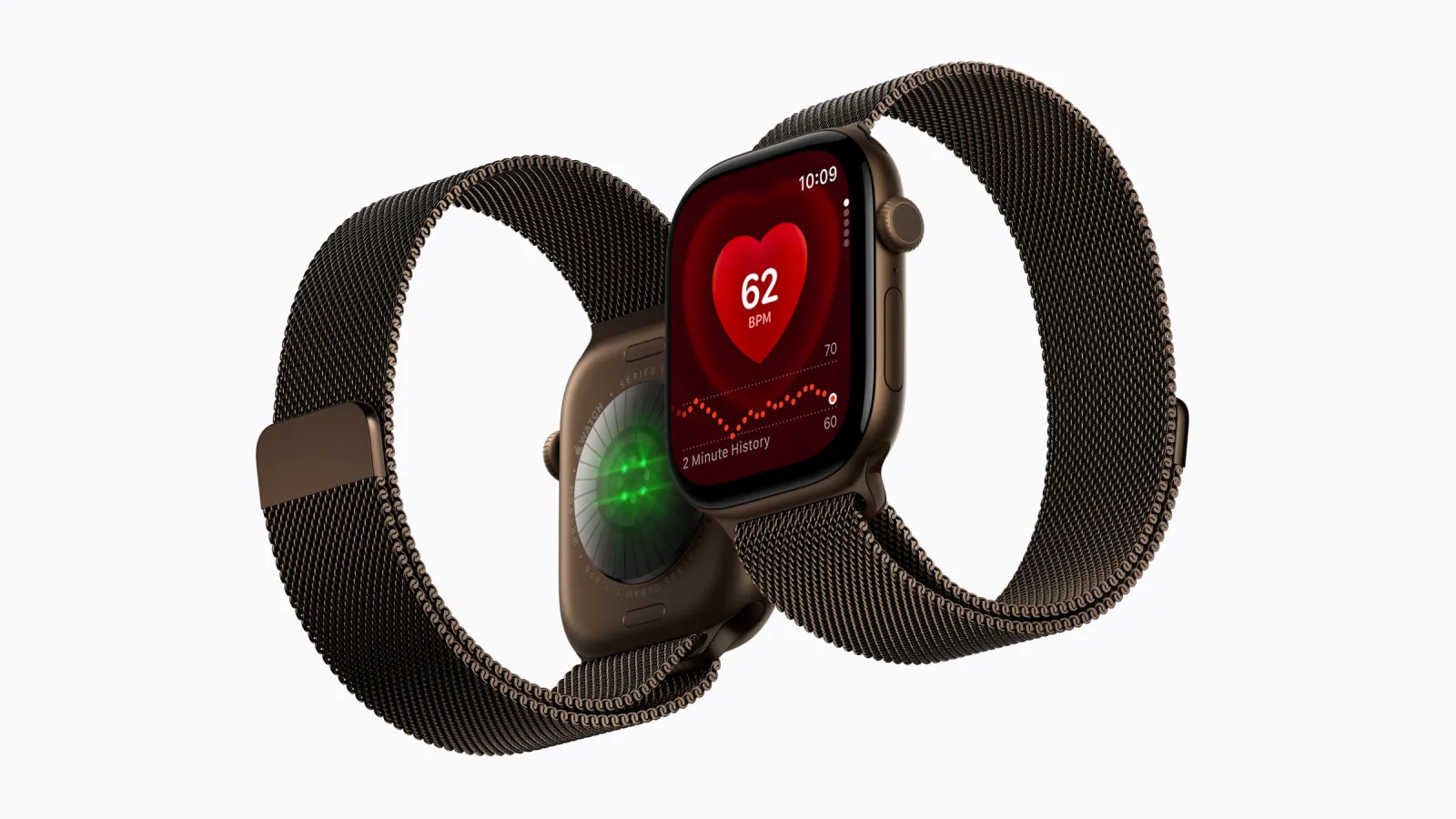
Both watches get the S11 chip and a new Health Sensing System: a heart-rate reading every five seconds and heart-rate variability measured up to 24 times more often than before. Those readings feed the new Readiness app - one score from 0 to 10 every morning with one of four messages: rest, take it easy, ready, go for it. There is also a redesigned Health app with Insights and Longevity tabs and a Health Age metric, but that part arrives "later this year," in English and in the US version first.
The new category of features is Audio Intelligence. Live Rewind, after a double press of the crown, shows a transcript of what was said in the last 15 seconds. Siri Recap listens to a conversation, say a meeting or a parent-teacher conference, and turns it into a note with a title, a summary and key points. Apple assured from the stage that "these Audio Intelligence features do not create or store audio recordings," and that the raw audio is inaccessible even to Apple. Both features require Siri AI and arrive later this year, in English first, as a beta.
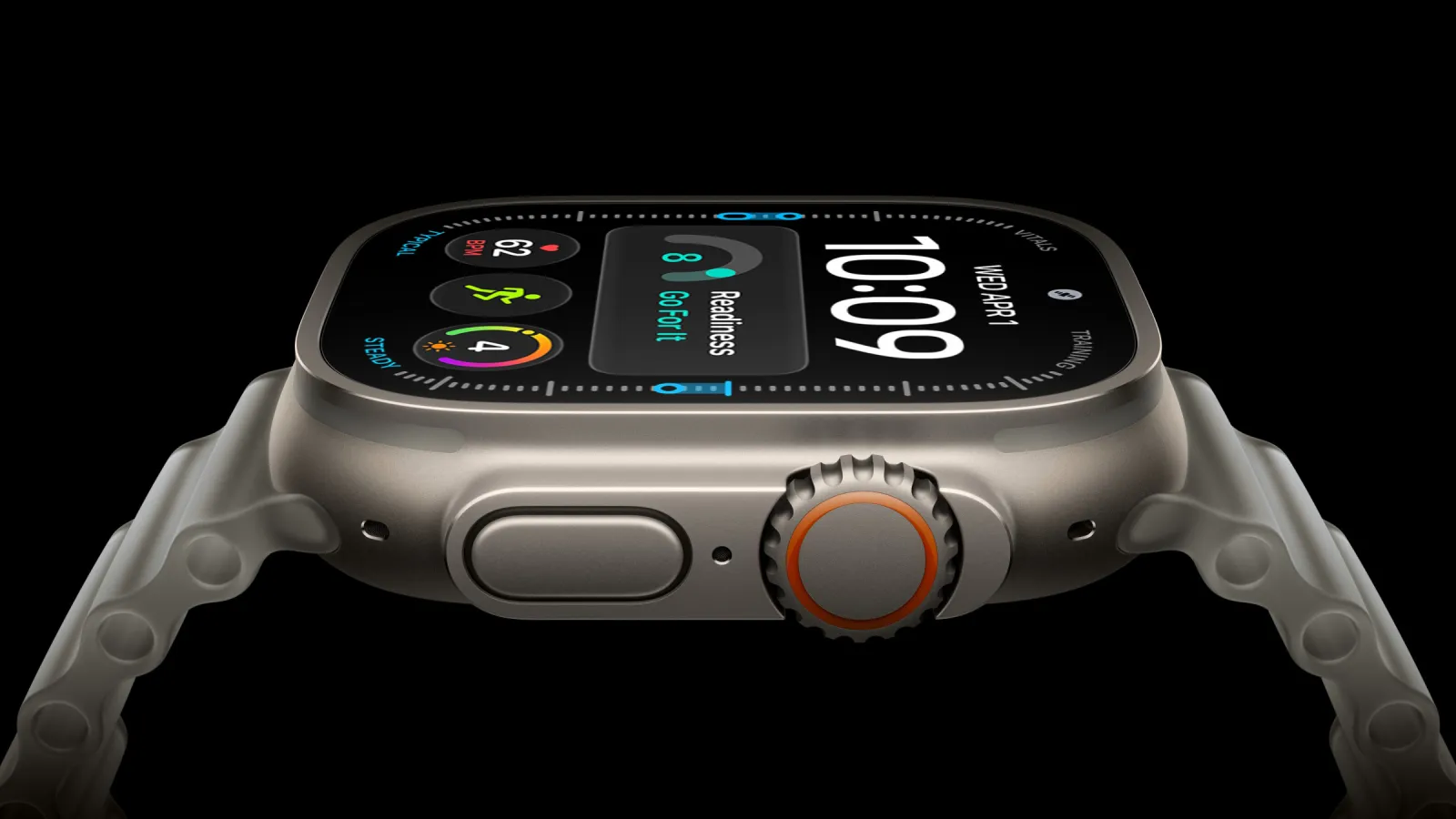
Series 12 comes in 42mm and 46mm cases in aluminum or titanium, with a 2,000-nit display and Ceramic Shield 2 on the aluminum versions. The ceramic case is back too (pearl white and night blue), in 43mm and 47mm sizes. Battery up to 24 hours, up to 38 in Low Power Mode, and 15 minutes of charging gives up to 12 hours of use. From $399 for the 42 mm aluminum model; Apple has not published US prices for the titanium and ceramic versions. Ultra 4 has a 49 mm titanium case and a 3,000-nit display and weighs 63 g. Battery: up to 50 hours, up to 84 in Low Power Mode and up to 45 hours in the extended workout mode. Water resistant to 100 m. From $799. Both are on pre-order from September 9 and in stores from September 18.
AirPods 5
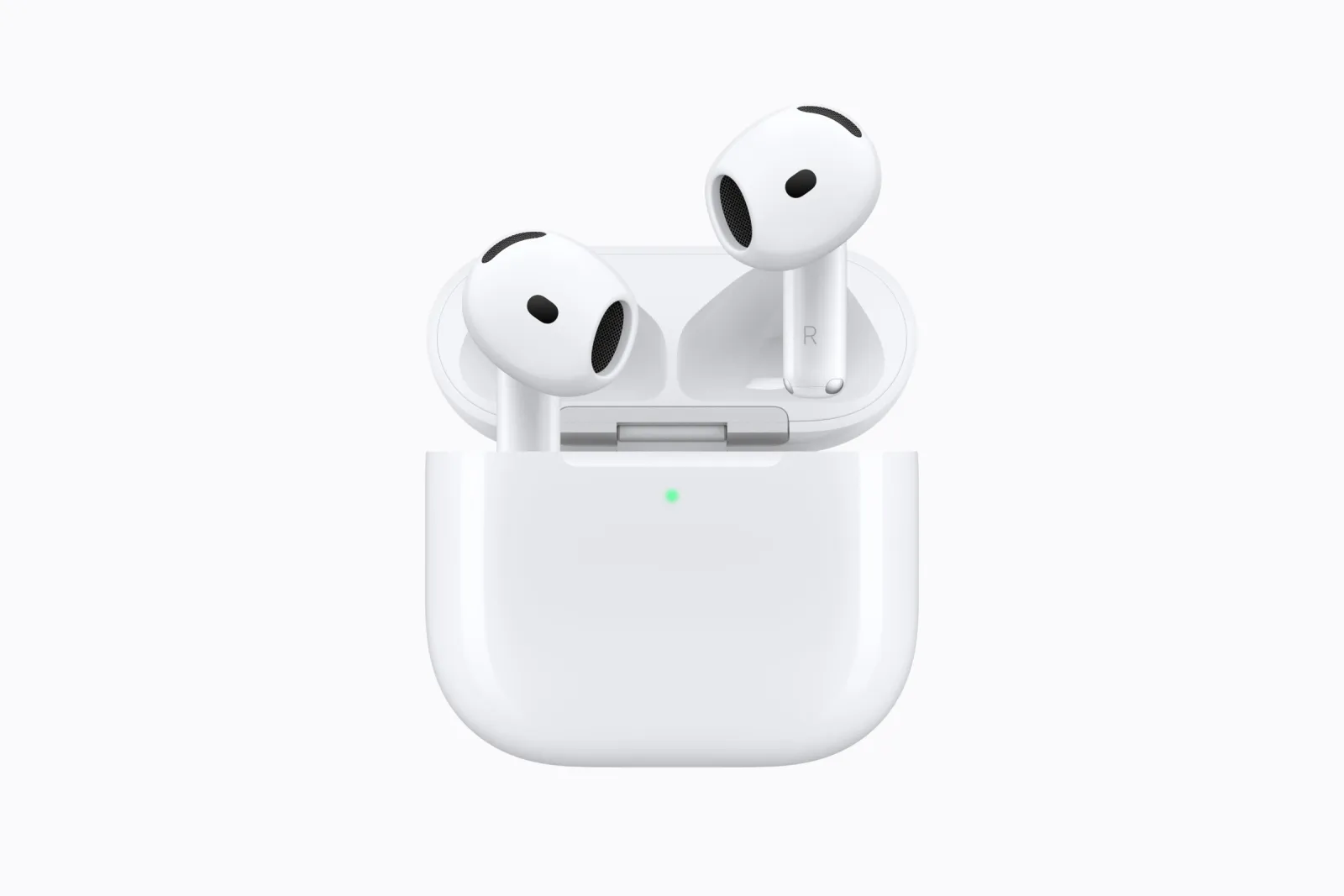
The most important change: Active Noise Cancellation is in both versions, not only the pricier one as with AirPods 4, and it is meant to be 50 percent more effective. The earbuds are still open, with no silicone tips. The earbuds also get a new multiport acoustic design, next-generation Adaptive EQ, Conversation Awareness and Live Translation. You can answer Siri's questions by nodding for yes or shaking your head for no.
Battery in the base version: up to 4 hours with ANC on and up to 20 with the case. In the version with the wireless charging case: up to 5 hours with ANC and up to 22 with the case. The pricier one has a pressure sensor on the stem that you swipe to change the volume - Apple says it is a first for open-ear earbuds. Prices: $129, and $149 with the wireless charging case. Pre-orders from September 9, in stores from September 18.
Dave Pakula, Apple's vice president of Hardware Engineering, in the press release: "We're thrilled that with AirPods 5, we're able to bring Active Noise Cancellation - one of our most beloved features - to our most affordable AirPods."
iOS 27, Siri AI and what the EU gets
iOS 27, iPadOS 27, macOS 27 Golden Gate, watchOS 27 and visionOS 27 arrive on Monday, September 14. Only tvOS 27 has no date yet. macOS 27 is the last version with full Rosetta, the layer that runs software written for Intel; after that only support for selected older games will remain.
iOS 27 brings Siri AI - a new Siri that knows the user's context (messages, mail, photos, calendar), sees what is on screen, takes actions inside apps and has its own app with a conversation history. It launches as a beta, in English only, with a waitlist. French, Japanese, Korean, Portuguese and Spanish follow in October. Apple Intelligence supports 16 languages: Chinese (Simplified and Traditional), Danish, Dutch, English, French, German, Italian, Japanese, Korean, Norwegian, Portuguese, Spanish, Swedish, Turkish and Vietnamese.
For the European Union there is one more restriction. A footnote in Apple's release reads: "Siri AI will not be available initially in the EU on iOS, iPadOS, and watchOS. Features that rely on Siri AI will also not be available in the EU on iOS, iPadOS, and watchOS." In the EU, Siri AI works only on the Mac and on Vision Pro. Not a word about this was said on stage; it all sits in the footnotes. Since June, Apple has been blaming its dispute with the European Commission over the DMA. The Commission replied at the time through spokesman Thomas Regnier: "The decision not to roll out Siri AI in the EU is Apple's and Apple's only." Nobody is giving a date.
There is one more new sentence in the footnotes. Apple Intelligence features that use servers - Siri AI, photo editing, Image Playground - have daily usage limits, and "expanded access to such features will be available for a fee in the future." All that was said on stage was that "increased access will be available with most iCloud+ plans". Apple gave neither prices nor a date. Siri AI is not available to anyone under 13.
Smaller things: iPhone Handoff lets you keep one number on two iPhones and switch between them, at launch on T-Mobile in the US and Deutsche Telekom. Notify Me in Safari watches a page for changes, for instance an item coming back in stock or a price drop. Image Playground generates photorealistic images, and later this year it gets the SynthID watermark (Google's standard) to mark images made or altered by AI. Apple is also extending free satellite connectivity by a year for iPhone 14, 15 and 16 models activated before September 9, in countries where the service works.
US prices and dates in one place
What the rumors said, and what was not shown
Mark Gurman of Bloomberg came closest. Twelve hours before the event he reported the name iPhone Duo while the whole industry was writing "iPhone Ultra", along with the price from $2,000, the colors, an October release, no telephoto, Touch ID in the button and Apple Pencil support. He was also the only one to predict the iPhone 18 Pro price rise of exactly $100, when IDC wrote of $200, Jeff Pu of $250-$300 and TrendForce of $150-$200. The reports about four 18 Pro colors, the smaller Dynamic Island with three Live Activities, the variable aperture, the 2 nm chip, the pre-order dates and the absence of a base iPhone 18 in September also came true.
The loudest misses concern the foldable's dimensions. For a year and a half everyone repeated Ming-Chi Kuo's figures of 7.8 and 5.5 inches at 4.5-4.8 mm unfolded - it turned out to be 7.6 and 5.4 inches at 5.2 mm. Instead of the promised "crease-free display", Apple talks about "minimizing the visibility of the crease". The variable aperture was supposed to be Pro Max only; it is in both models. Face ID was supposed to move under the display on the 18 Pro; the Dynamic Island stayed. Noise cancellation in AirPods 5 was supposed to be limited to the pricier variant; it is in both. And as late as early September MacRumors wrote that the 18 Pro would not come in black.
Many of the expected products were not shown. In August Gurman was predicting eight products, including an Apple TV 4K, a HomePod mini and a home hub with a 7-inch display. There were five plus AirPods. On the morning of the event he wrote on X himself: "IF you don't see the Apple TV, HomePod mini, home display and touch MacBook today, don't worry. It's only September." According to his September 4 reporting, the home hardware is due in early 2027. An OLED iPad mini is expected by the end of October, and a 14-inch MacBook Pro with M6 and an M6 iMac by the end of the year. Apple already announced the Mac Studio and Mac mini on August 25, by press release, without an event. The base iPhone 18, iPhone 18e and iPhone Air 2 are planned for spring 2027. Nobody was counting on an Apple Watch SE 4 or camera-equipped AirPods Pro this year.
Add to that list two things no rumor predicted, which follow directly from the footnotes in Apple's iPhone 18 Pro and iPhone Duo releases: Siri AI does not work on iPhones in the European Union, and Apple Intelligence speaks 16 languages, so if yours is not on the list, neither is the AI.
DMA (Digital Markets Act) - the EU regulation on digital markets that imposes interoperability obligations on the largest platforms; Apple argues it would force the company to give other assistants the same system access Siri AI has. Private Cloud Compute - Apple's servers, which receive the requests the on-device model cannot handle; according to Apple, nobody, Apple included, has access to the data processed there. Nano-texture - a matte finish that reduces reflections, known from Apple displays; on the iPhone Duo it is a layer of special polymer on the folding screen.